Now
Search by topic or task. Try campaign calendar or switch providers.
Switching path: compare, migrate and cut over
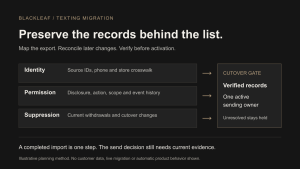
Replacing a Texting provider? Work through these five stages before relying on a new setup. The migration guide supplies the field worksheets; its timeline planner turns those records into a proposed handoff.
-
Confirm the provider fits your actual program
Review support for your business, use case, sender and destination. Ask about the exact connection, exports, permission records, suppression and support responsibilities before choosing a replacement.
-
Compare the total cost and exit terms
Use your expected SMS segments and MMS volume. Compare subscription payment timing, usage fees, registration, services, renewal and cancellation terms; a headline message rate is not the full bill.
-
Map the records and resolve gaps
Use the field-mapping and acceptance worksheets. Preserve identity, actual permission history and current withdrawals separately; record missing fields and later changes. An export or imported flag does not establish permission.
-
Plan the cutover, owners and recovery
Turn the mapping into a timeline with actual provider dependencies, authorized acceptance evidence and a go-or-hold decision. Assign one active sending owner per workflow and ongoing inbound and suppression ownership.
-
Review the actual handoff evidence
After a separately authorized cutover, review attempts, final status, replies and withdrawal handling. Investigate exact source records and unresolved states before retrying; accepted or sent is different from delivered.
A completed plan does not transfer a sender, import records, approve a test or cancel service. Confirm the actual handoff and access, billing and retention terms before any separately authorized exit action. Supported existing-POS Texting does not require a Blackleaf POS switch.
Discuss your Texting provider switch