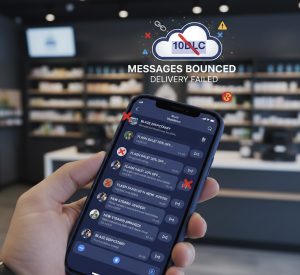
Long-term contracts for dispensary texting can lock you into switching costs before you know if deliverability will hold at scale. In regulated industries, SMS performance is not just a feature checklist. It is the result of registration alignment, consent hygiene, identity consistency, and how your messages behave under carrier filtering.
This page is a practical operator guide for testing a dispensary texting platform before you commit to an annual agreement. You will run a controlled rollout, measure lift, and confirm the operational and compliance foundation that protects deliverability over time.
The outcome is simple. You either earn the confidence to commit, or you keep leverage and avoid a costly lock-in.
Page Summary
- Test infrastructure before strategy. Registration, consent, and identity determine reach before copywriting does.
- Use a controlled segment and a holdout group. Measure incremental lift, not vanity metrics.
- Scale only after stability. Deliverability problems are easier to fix at 2,000 recipients than at 200,000.
- Commit when the system is repeatable. Long contracts make sense after you can produce consistent results with low operational friction.
Definition
Pre-contract SMS testing is a controlled evaluation of a texting platform’s deliverability, registration alignment, consent handling, and operational workflow before signing a long-term agreement.
In dispensary texting, “works” means you can reliably deliver permission-based messages, handle opt-outs immediately, keep destinations consistent, and sustain stable reach as you increase volume.
For deeper background, use 10DLC for dispensaries, SMS opt-in for dispensaries, dispensary SMS deliverability, and carrier filtering.
Why You Should Test Before You Sign a Long Contract
Most dispensary operators do not regret their SMS vendor choice because the UI was missing a feature. They regret it because the program becomes operationally heavy, deliverability becomes unpredictable, or the contract removes leverage when performance changes.
| Risk | What it looks like | Why it hurts |
|---|---|---|
| Switching costs | Re-registration, list migration, number porting | Months of friction and lost momentum |
| Lock-in | Messaging tied to POS or a suite contract | Harder to improve your stack without penalties |
| Filtering surprises | Early sends work, later volume gets blocked or throttled | Revenue drops while you are still paying |
| Consent drift | Mixed opt-in sources and unclear permission records | Opt-outs, complaints, and instability |
Testing first changes the sequence. You validate whether the channel can be stable before you commit to a contract that is difficult to unwind.
Results are the destination. Compliance and deliverability are the travel.
If the travel is unstable, you do not reach the destination. A controlled test lets you build the foundation once, then scale without re-learning the same lessons under pressure.
Before You Test
- Confirm your business identity data. Legal name, EIN, address, and a consistent public web presence.
- Confirm your permission standard. Only text people who opted in to receive messages from your business.
- Choose a stable sender identity. One brand identity, consistent domains, and predictable opt-out behavior.
Carrier content enforcement matters. Carriers enforce restricted content categories and risky patterns. These rules are often summarized as SHAFT (Sex, Hate, Alcohol, Firearms, Tobacco), plus other regulated content and policy-based filtering. Your goal is to keep messaging permission-based, predictable, and aligned to your registered use case so reach stays stable.
A Practical Test Plan That Protects Your List
This plan is designed to validate deliverability and lift without burning your list. The goal is stable behavior first, then scaling.
-
Step 1: Complete registration alignment. Ensure your 10DLC brand and campaign information matches what you actually plan to send and how you will send it.
Mismatch is one of the fastest ways to create filtering risk later.
-
Step 2: Build a test segment. Select a small, recent, high-intent group. Do not start with the full list.
- Recent shoppers or recent online orders
- Clear opt-in records
- Deduplicated numbers
Start with a segment that makes it easy to interpret results.
-
Step 3: Create a holdout group. Leave a similar portion unsent. Your test needs a comparison group.
This isolates lift from organic store traffic and seasonality.
-
Step 4: Send a baseline message pattern. Keep the first campaign short, identity-forward, and predictable.
Message structure that stays stable:
- Brand identity at the top of the message
- Clear context for why the customer is receiving it
- One action or next step
- Standard opt-out language
-
Step 5: Measure what matters. The goal is reliable performance and lift, not a perfect click rate.
Metric What it tells you Why it matters Delivered rate Whether messages are reaching devices Reach is the prerequisite for ROI Opt-out rate Whether targeting and expectations are aligned High opt-outs predict future instability Reply rate Whether customers treat the channel as conversational Useful for service workflows and trust Revenue per delivered message Whether the send produces measurable outcomes Ties SMS to business impact If you want to diagnose declines, use deliverability troubleshooting.
-
Step 6: Scale gradually with consistency. Increase volume only after results are stable across multiple sends and message types.
Consistency of identity, destinations, and cadence supports recognition and reduces opt-outs.
Setup problems look like marketing problems later
If registration, consent, or list hygiene are weak, you can get short-term results and still lose long-term reach. Fix the foundations first so your program stays usable.
What You Are Actually Testing
A platform test is not just “can we send a message.” It is whether you can run the channel as a system.
| Area | Test question | Pass condition |
|---|---|---|
| Registration | Does approval match the real use case? | Approved and aligned to behavior |
| Consent | Can you prove opt-in for recipients? | Only opted-in contacts are messaged |
| Deliverability | Is delivery stable across multiple sends? | Stable delivery under moderate volume |
| Filtering | Do messages pass carrier content enforcement? | No unusual rejection patterns |
| Workflow | Can staff send without friction? | Repeatable process and clear roles |
| Measurement | Can you tie sends to outcomes? | Lift and revenue per delivered message are measurable |
Common Failures During Vendor Testing
- Testing on the full list first. It creates risk before you have baseline data.
- Using unclear permission records. It inflates opt-outs and complaint signals.
- Changing identity frequently. It reduces recognition and increases churn.
- Measuring clicks only. Clicks can mislead in regulated categories. Tie results to outcomes.
- Scaling before stability. Fix instability at small volume, not after damage is done.
If reach drops, start with carrier filtering and deliverability troubleshooting.
When It Makes Sense to Commit to a Long-Term Agreement
Long-term agreements make sense when you have proof the channel is stable and the workflow is repeatable.
- Registration is approved and aligned. You are not guessing what carriers will accept.
- Delivery is stable. You have consistent behavior across multiple sends.
- Opt-out handling is clean. STOP behavior works and suppression is immediate.
- Lift is measurable. You can show incremental value versus a holdout group.
- The workflow is low friction. Staff can execute without constant intervention.
If a vendor cannot pass these tests, the contract will not solve it. It will only make it harder to change course.
FAQ
How long should we test before signing a long-term contract?
Run at least two weeks of controlled sends so you can observe stability across multiple campaigns and not just one day of performance.
Can we test a texting platform without changing our POS?
Yes. Testing independently keeps the scope small and lets you validate reach and workflow before making deeper system changes.
What is the safest first campaign for a test?
Start with a small opted-in segment, use consistent identity and one clear call to action, and confirm opt-out handling works before you expand volume.
What metrics matter most when comparing vendors?
Delivered rate, opt-out rate, and revenue per delivered message. Click rate alone can mislead in regulated categories.
What if deliverability drops during the test?
Pause scaling, reduce audience size, and review recent changes to message patterns and destinations. Then troubleshoot carrier filtering signals.
Do we need an age gate during testing?
Use an age gate pattern when your destination includes regulated details that should be verified before display. Keep the message itself permission-based and predictable.
Final Takeaway
The best way to choose a dispensary texting platform is to test it as infrastructure. Validate registration alignment, consent handling, deliverability stability, and lift before you sign a long-term contract.
Start small, measure outcomes, then commit when the system is repeatable.
Sources and Further Reading
FCC: Stop unwanted robocalls and texts
CTIA: Messaging Principles and Best Practices (PDF)
The Campaign Registry (A2P 10DLC)
Blackleaf: 10DLC for dispensaries
Want a low-risk test before you commit?
Set up a controlled send with clean consent handling, registration alignment, and a measurement plan that shows lift before you sign a long-term agreement.
Talk to Blackleaf