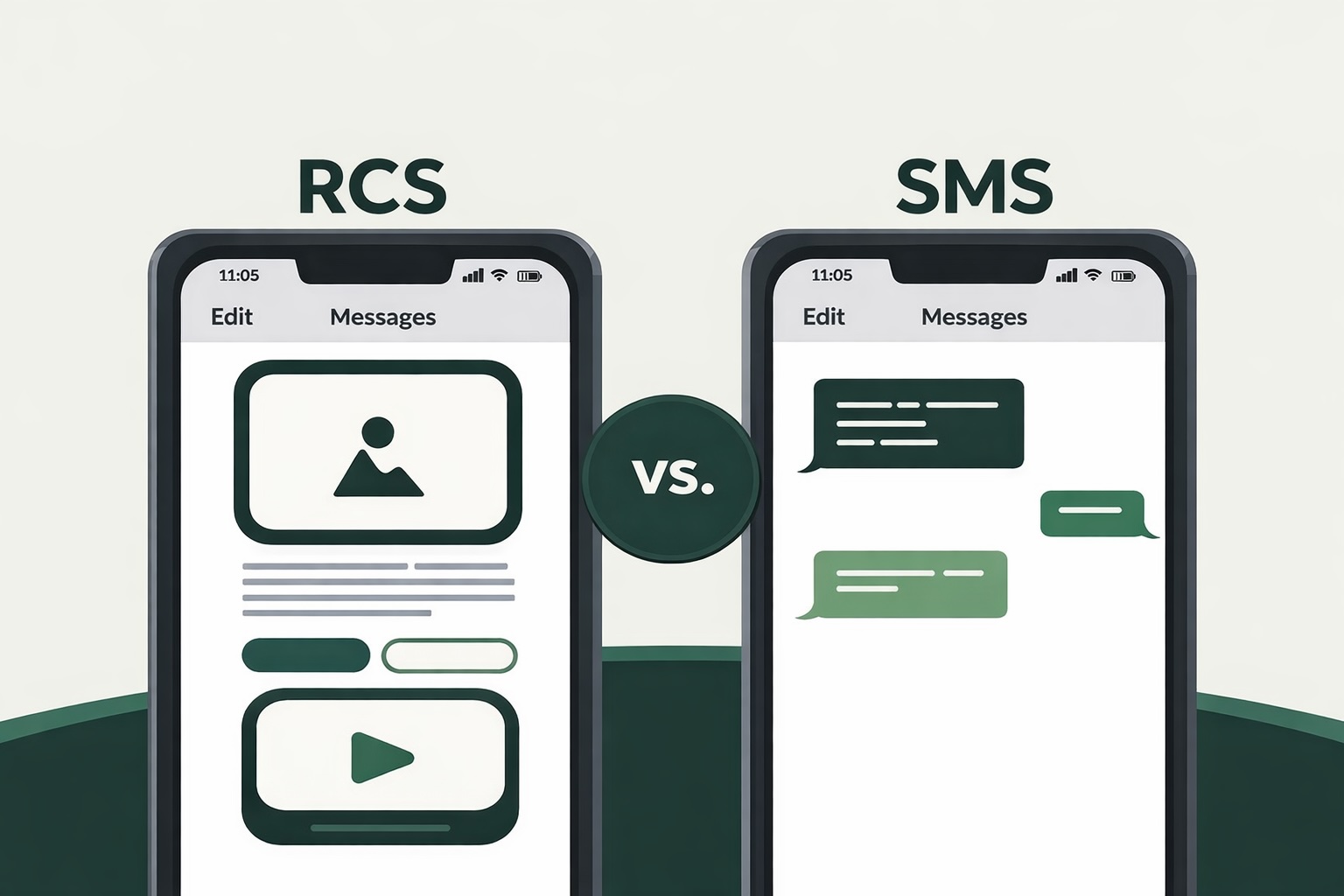
RCS, or Rich Communication Services, adds richer features to mobile messaging. For a cannabis business, the first question is whether the provider supports the business and its intended messages. A compatible phone or a branded messaging demo does not establish that approval.
As reviewed on October 27, 2026, Twilio explicitly lists cannabis among its prohibited RCS categories. Other providers, carriers and destinations have their own requirements. SMS and MMS also have restrictions, so choosing an older message format does not automatically make a cannabis program eligible.
What Is RCS Messaging?
RCS is a messaging protocol that can support media and interactive conversations. RCS for Business uses a business sender or agent to communicate with customers. Features can include a branded profile, rich cards, suggested replies and message status information, depending on the service and recipient support.
Google describes these interactions in its RCS for Business overview. Consumer RCS conversations and business messaging are related, but support for one does not prove support for the other.
How RCS Differs From SMS and MMS
SMS carries text; MMS adds supported media. RCS can offer richer interactions over a data connection. Actual RCS for Business reach depends on the recipient’s device, settings, carrier and destination, as well as the sender’s launch coverage.
A familiar message format is not a delivery guarantee. Evaluate the reachable, permitted audience for each channel rather than assuming every phone can receive every business message.
How Business Messaging Is Approved
Separate two checks: can this recipient receive the format, and is this business approved to send this use case? A successful capability check answers the first question only.
Google’s RCS for Business acceptable use policy requires accurate business and use-case declarations, recipient consent and opt-out handling. Its regulated-content provisions are limited and do not establish approval for a particular cannabis business. Provider and carrier review still matters.
Why Cannabis Brands Face RCS Restrictions
Twilio’s RCS best practices and FAQ explicitly includes cannabis in its prohibited categories. That is a concrete restriction on Twilio’s offering, not evidence that every provider has the same availability everywhere.
Sinch’s RCS content restrictions guidance also explains that carrier and regional restrictions can apply in addition to Google’s policy. State authorization to operate a dispensary does not, by itself, establish a provider’s approval. Obtain a clear answer for the actual business, destination and message purpose before planning a launch.
RCS vs SMS for a Cannabis Program
SMS is not a policy-free alternative. Twilio’s cannabis messaging policy, for example, restricts cannabis-related SMS and MMS in the United States and Canada. That provider policy should not be presented as a description of Blackleaf’s infrastructure or every messaging service.
Compare confirmed eligibility, audience reach, total costs, consent handling and available reporting. For a broader channel comparison, see SMS versus push notifications for dispensaries. Neither a rich format nor a delivery status proves additional sales.
What to Confirm Before Choosing RCS
- Does the provider explicitly support your business category and intended messages?
- Which destinations, carriers and recipients can receive the approved business sender?
- What registration, usage and fallback charges apply?
- How are consent, opt-outs, failures and duplicate attempts handled?
- What happens when the recipient cannot receive RCS?
If fallback is offered, review the alternate sender, message, permission and costs separately. A failed RCS attempt does not create permission to send an SMS or override that channel’s restrictions.
Planning Texting With Your Existing POS
Blackleaf Texting works with supported existing POS systems without requiring a POS switch. Review your connection and intended campaign with the team through Blackleaf’s dispensary Texting platform. This is not a claim that Blackleaf offers RCS.
Blackleaf requires explicit recipient consent and age confirmation before texting. Its intended-recipient verification asks the recipient to select the birthday on file; the saved birthday must not be disclosed. These are Blackleaf requirements, not a promise of universal carrier approval.
The Practical Takeaway
Choose a messaging program from confirmed business eligibility and customer permission first, then evaluate the format. Recheck current provider policies before launch or a material use-case change. RCS features, SMS reach and lawful business operations each answer a different question; none replaces the remaining checks.