Introduction
Most dispensaries treat SMS list growth like a marketing problem. It is more often an operations problem. Your store already has the highest-intent moments you will ever get: checkout, pickup, loyalty enrollment, and post-purchase follow-up. If you are not capturing opt ins there, a website popup is not going to save you.
This article is a practical field guide to placements that actually grow subscribers in real dispensary environments, with language patterns that keep you compliant and reduce carrier filtering risk. For the compliance baseline, start with cannabis SMS compliance and age-gated texting.
What’s Really Happening
There are three forces shaping SMS list growth right now: tighter consent expectations, more aggressive carrier filtering, and higher customer sensitivity to “marketing” language in regulated categories. In practice, this creates a simple reality: the fastest list growth comes from placements that feel transactional, helpful, and immediate, not promotional.
Dispensaries also underestimate friction. Every extra field, every unclear checkbox, every vague promise, and every “we’ll text you deals” pitch reduces opt in rate. If you want volume and deliverability, you need clean consent capture and clean first messages. Use SMS message templates to standardize what your staff says and what customers receive first.
Finally, list quality matters more than list size. A smaller list with clear consent and low complaint rates will outperform a larger list that triggers filtering. If deliverability is already shaky, review SMS deliverability and carrier filtering before you chase growth.
Why It Matters for Dispensaries
In cannabis retail, your paid acquisition options are constrained and your owned channels are everything. SMS is the closest thing to a reliable reach channel, but only if your consent and content stay within what carriers will tolerate.
List growth affects more than campaigns. It affects your ability to handle operational communication at scale: order updates, pickup instructions, service alerts, and loyalty status messaging. If you run SMS like a one-way “blast” channel, you invite complaints and filtering. If you run it like a customer communication channel, you build a durable asset. For a bigger picture view of dispensary texting, see dispensary texting.
Practical Implications
Below are 12 placements that consistently drive subscribers. They are ordered by real-world impact. Each one includes what to do, why it works, and compliance-safe language patterns.
-
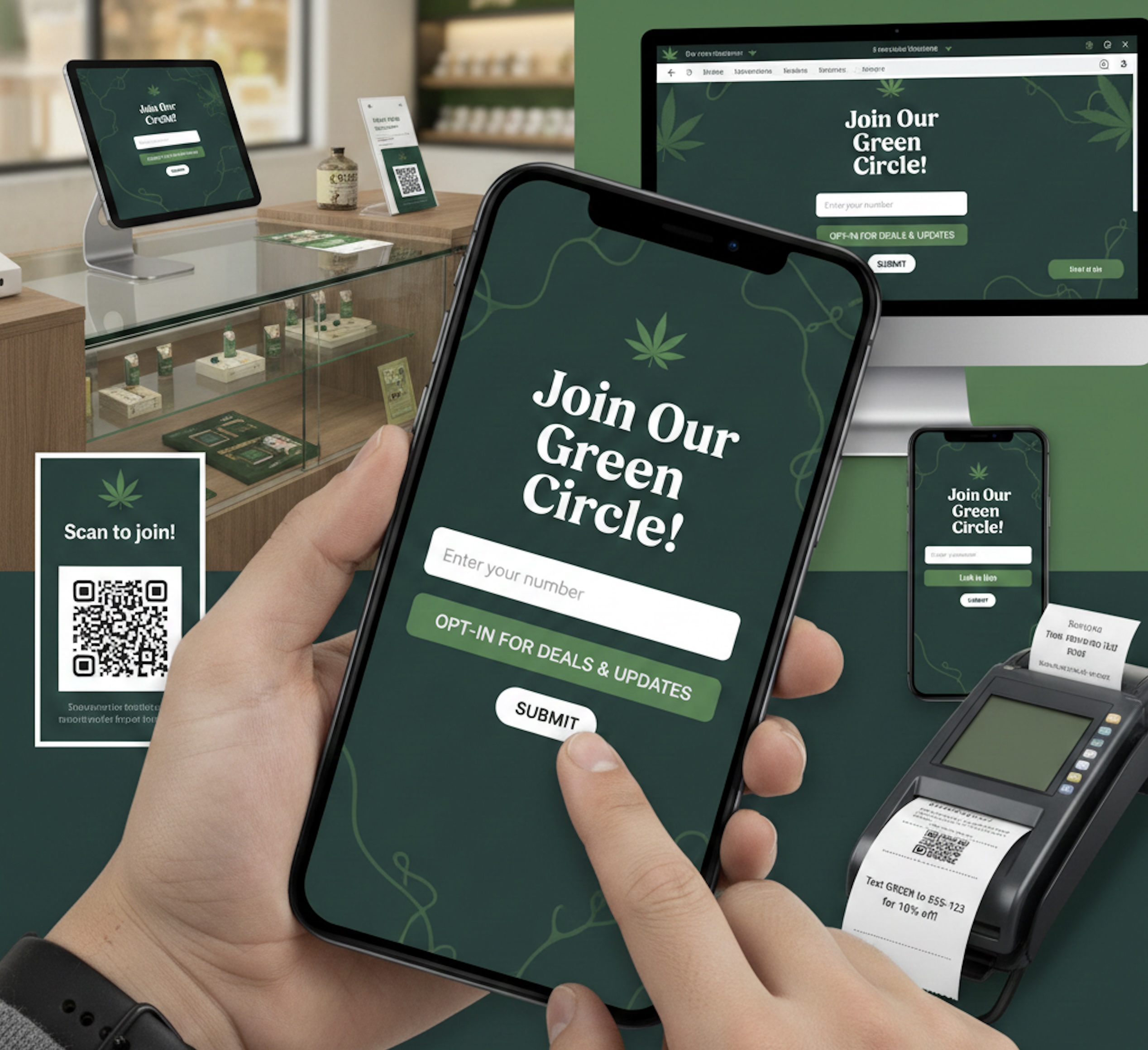
Checkout counter sign with a short code or QR
Put it where the customer’s wallet already is. Make the value immediate: order updates, pickup instructions, and account notifications. Avoid “deals” language as your primary pitch.
Compliance-safe copy: “Text JOIN to (short code) to get order updates and account notifications. Reply STOP to opt out.”
-
Receipt footer and digital receipt screen
Receipts are the most underused placement in dispensaries. Customers actually read them when they have a problem, and that is when utility beats promotion.
Compliance-safe copy: “Get digital receipts and order updates by joining SMS. Reply STOP to opt out.”
-
Loyalty enrollment flow
If your loyalty signup is not capturing SMS, you are leaving opt ins on the table. The key is clarity: one checkbox for SMS consent, not a bundled mess.
Implementation note: Use age gating logic where required, and keep consent language explicit. See SMS opt-in and opt-in and consent for dispensaries.
-
Pickup shelf signage for online orders
Pickup customers have the strongest intent and the highest tolerance for operational messages. This placement converts because it feels like service, not marketing.
Compliance-safe copy: “Get pickup ready texts and order status updates. Reply STOP to opt out.”
-
In-store kiosk or iPad “join” screen
If you have a kiosk for menus, loyalty, or check-in, add a dedicated SMS join module. Keep it one screen, one action.
Tip: Use a confirmation step that echoes what they are signing up for and reminds them of STOP.
-
Guest WiFi captive portal
WiFi portals convert well because customers are already giving information for access. Make SMS optional and clearly separated from WiFi access approval.
Compliance-safe copy: “Optional: Join SMS for store updates and order notifications. Reply STOP to opt out.”
-
Website exit intent or timed popup
Popups can work, but only if your pitch is credible and your form is low friction. If you ask for too much, conversion falls off a cliff.
Implementation note: If you are operating in a market that requires age gating on marketing content, implement it properly. Reference age-gated texting.
-
Post-purchase “thank you” card in exit bag
A small insert in the bag is cheap and effective, especially for stores with high repeat traffic. It also avoids staff inconsistency.
Compliance-safe copy: “Questions about your order? Join SMS for help and order updates. Reply STOP to opt out.”
-
Delivery bag insert and delivery confirmation page
Delivery customers want coordination and status. Use SMS for operational updates first. If you lead with promotions, you increase opt outs.
Next step: When you have consent, use automations to follow up with service-first flows. See SMS automation and SMS automation flows for dispensaries.
-
Budtender script at checkout (one sentence)
This is high leverage, but only if it is consistent. Give staff a single sentence and make it part of checkout, not an optional add-on.
Script: “Want order updates and receipts by text? It’s optional, and you can stop anytime.”
Training: Pair the script with a printed QR code so customers self-complete without staff typing numbers.
-
Returns or issue resolution desk
When a customer has an issue, they want resolution and documentation. This placement converts because it is about support, not marketing.
Compliance-safe copy: “Join SMS for case updates and order support messages. Reply STOP to opt out.”
-
Community event signups (in-store or off-site)
Events are great for list growth, but they are also where consent quality often collapses. Avoid paper lists that get imported later without proof of consent.
Best practice: Use a QR that leads to a consent capture page and stores timestamp and source.
If you need examples of first messages that set expectations and reduce complaints, pull from SMS message templates. If you are seeing blocks or sudden performance drops after scaling opt ins, review SMS deliverability troubleshooting.
Common Mistakes or Misconceptions
-
“We just need more traffic.” If your in-store and post-purchase placements are weak, more traffic mostly creates more missed opportunities.
-
Bundling consent. One checkbox for SMS, one for email, one for terms. Bundling creates confusion and increases complaints.
-
Leading with promotions. In regulated categories, “deals” framing can increase opt outs and filtering. Lead with utility, then earn promotional permission over time.
-
Paper sign-up sheets. They create consent proof gaps and data quality issues. Use digital capture with timestamp and source.
-
No confirmation message strategy. Your first message sets expectations. If it surprises people, you will get STOP and complaints.
-
Ignoring deliverability signals. If you scale opt ins while your content triggers filtering, you grow a list you cannot reliably reach. Start with carrier filtering and SMS deliverability.
FAQ
Question: What is the single best placement for dispensary SMS opt ins?
Answer: Checkout signage paired with a QR code usually wins because it captures customers at the moment of purchase with minimal friction.
Question: Can we offer a discount for joining SMS?
Answer: Promotions can increase opt in rates, but they can also increase opt outs and complaints if expectations are unclear. In regulated categories, start with service value, then test promotional framing carefully while monitoring deliverability signals.
Question: Do we need age gating for SMS opt ins?
Answer: Many operators implement age gating as part of responsible marketing and compliance posture. The right approach depends on your market and your risk tolerance. See age-gated texting for implementation concepts.
Question: What consent language should we use at signup?
Answer: Use plain language that states what messages they will receive, that message and data rates may apply, and that they can reply STOP to opt out. Avoid bundling consent with unrelated terms. For a deeper baseline, see opt-in and consent for dispensaries.
Question: Why did our opt in rate go up but performance went down?
Answer: That often indicates lower-quality consent capture, unclear expectations, or content that triggers filtering. Check opt out rates, complaint signals, and carrier blocking patterns. Use SMS deliverability troubleshooting.
Question: Should we use double opt in?
Answer: Double opt in can improve consent quality and reduce complaints, but it can reduce raw conversion. For dispensaries prioritizing deliverability and long-term stability, it is often worth considering, especially for higher-volume programs.
Question: How fast should we expect list growth?
Answer: Growth depends on transactions, not just foot traffic. Strong placements can produce steady daily net adds, but you should focus on net growth after STOPs and complaints, not gross signups.
Metrics or Signals to Watch
Opt in growth without measurement is how you create a compliance and deliverability problem you only discover after revenue drops. Track these weekly, not quarterly.
| Signal | What it tells you | What to do if it worsens |
|---|---|---|
| Opt in conversion rate by placement | Which placements actually drive subscribers | Kill low performers, simplify language, reduce fields |
| STOP rate within first 7 days | Expectation mismatch or low-quality consent | Fix first message, tighten consent copy, reduce promotional framing |
| Delivery rate trends | Carrier filtering or routing issues | Audit content patterns and sending behavior, review SMS deliverability |
| Spam complaint indicators | High risk behavior that can trigger filtering | Rework placements and copy, ensure opt out is honored immediately |
| List growth net of churn | True program health | Improve onboarding flow and message relevance, not just acquisition |
If you are scaling to higher volumes, verify your registration posture and policies. Start with 10DLC for dispensaries and 10DLC registration overview.
Sources and Further Reading
-
CTIA Messaging Principles and Best Practices provides industry guidance for consent, content, and consumer protections in messaging programs.
-
The Campaign Registry is the primary ecosystem reference for A2P 10DLC campaign registration concepts and requirements.
-
FCC telemarketing and robocalls guidance summarizes TCPA-related enforcement posture and consumer protections relevant to automated messaging.
-
FTC advertising and marketing guidance outlines truth-in-advertising expectations that can apply to claims made in marketing messages.
This content is informational and operational in nature, not legal advice. When in doubt, align your program with documented consent practices and conservative messaging patterns.