- What “Dispensary Operations” Really Means
- The Core Pillars of Dispensary Operations
- Staffing and Floor Operations
- Inventory Operations: Where Margins Are Usually Lost
- Compliance Is an Operational Function, Not a Legal One
- Communication Is a Core Operations System
- The Dispensary Operations Technology Stack
- Why Dispensary Operations Break at Scale
- How High-Performing Dispensaries Fix Operational Gaps
- Final Thoughts on Dispensary Operations
When people search for dispensary operations, they are rarely looking for theory. They are trying to understand how real dispensaries function day to day, where breakdowns occur, and how successful operators avoid chaos as they grow.
Modern dispensary operations are not built on hero employees, manual workarounds, or scattered tools. They are built on systems, repeatable processes, and clear communication.
What “Dispensary Operations” Really Means
Dispensary operations refer to the systems that keep a cannabis retail business running consistently. This includes staffing, inventory flow, compliance, customer experience, and internal communication.
Strong operations are invisible to customers. Weak operations show up as long lines, incorrect orders, compliance violations, frustrated staff, and lost revenue.
The Core Pillars of Dispensary Operations
High-performing dispensaries tend to organize operations around a few core pillars:
- Staffing and floor execution
- Inventory management and product flow
- Customer experience systems
- Compliance and audit readiness
- Communication infrastructure
- Technology and reporting
When any one of these breaks down, the entire operation feels it.
Staffing and Floor Operations
Most dispensaries do not fail because they lack good staff. They fail because knowledge lives in people instead of systems.
Effective dispensary operations rely on:
- Clear opening and closing procedures
- Consistent shift handoffs
- Defined budtender responsibilities
- Repeatable training processes
When floor operations depend on memory instead of structure, mistakes compound quickly during peak hours.
Inventory Operations: Where Margins Are Usually Lost
Inventory is one of the most fragile parts of dispensary operations. Too many SKUs, inconsistent sell-through, and delayed reordering are common issues even in well-run stores.
Strong inventory operations focus on:
- Sell-through velocity, not just product count
- Reducing dead or slow-moving inventory
- Clear receiving and reconciliation workflows
- Accurate menu representation across channels
Inventory problems often surface as operational stress before they appear on financial reports.
Compliance Is an Operational Function, Not a Legal One
Compliance failures are rarely caused by misunderstanding the law. They are caused by operational gaps.
Common operational compliance risks include:
- Inconsistent ID verification processes
- Poor recordkeeping
- Uncontrolled customer communications
- Staff improvising under pressure
Treating compliance as part of daily operations, rather than a separate legal task, reduces risk and improves consistency.
Communication Is a Core Operations System
Many dispensaries treat communication as a marketing function. In reality, it is an operational one.
Operational communication includes:
- Order readiness notifications
- Policy or hour updates
- Queue and traffic flow management
- Compliance-related customer messaging
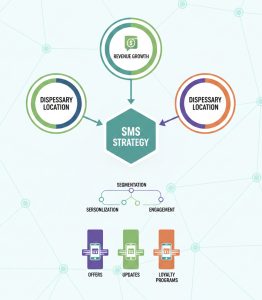
When communication systems are unreliable or fragmented, front-line staff absorb the burden manually.
This is why many dispensaries rely on SMS infrastructure that supports compliance, consent, and visibility rather than promotional tactics alone.
Related reading: Age-Gated, Logically Related Consent Forms and Transactional vs Promotional Text Messages.
The Dispensary Operations Technology Stack
Modern dispensary operations rely on a tightly integrated technology stack. This typically includes:
- POS systems
- Inventory management tools
- Ecommerce and online ordering
- Customer communication platforms
- Reporting and analytics
The goal is not more tools, but fewer gaps between them. Disconnected systems create operational blind spots.
Why Dispensary Operations Break at Scale
Many dispensaries operate smoothly at one location and struggle when expanding to multiple stores.
Common reasons include:
- Processes that only work informally
- Too many disconnected platforms
- Lack of centralized communication controls
- No operational owner for systems
Scaling exposes weaknesses that were previously manageable.
How High-Performing Dispensaries Fix Operational Gaps
Strong operators focus on:
- Documented workflows
- Clear system ownership
- Operational visibility across teams
- Communication systems designed for regulated environments
Rather than adding complexity, they simplify operations by treating communication, compliance, and customer flow as connected systems.
Final Thoughts on Dispensary Operations
Dispensary operations are not about working harder. They are about removing friction.
The most successful dispensaries run quietly, predictably, and consistently because their systems support the people running them.
When operations are structured correctly, growth becomes manageable instead of chaotic.