- What Is Dispensary Mass Texting?
- Why Mass Texting Often Underperforms
- A Smarter Strategy for Dispensary Mass Texting
- How Often Should Dispensaries Send Mass Texts?
- Why Frequency Matters More Than Creativity
- Compliance Fundamentals for Dispensary Mass Texting
- SMS vs MMS in Mass Texting
- Monitoring Performance After Sending
- Final Takeaway
Dispensary mass texting is one of the fastest ways to reach customers, but it’s also one of the easiest ways to create deliverability and compliance problems when handled incorrectly.
Mass texting works best when it is structured, conservative, and tied to real customer value. This guide explains how dispensaries should approach mass texting in 2026, how often to send messages, and what compliance fundamentals cannot be ignored.
What Is Dispensary Mass Texting?
Dispensary mass texting refers to sending the same or similar SMS messages to a large group of opted-in customers at once.
Common use cases include:
- Store updates and notifications
- Rewards or account credit reminders
- Time-sensitive announcements
- Operational messages tied to store activity
Mass texting is effective because it is immediate and highly visible. It is risky when it becomes repetitive or overly promotional.
Why Mass Texting Often Underperforms
Many dispensaries struggle with mass texting not because of content quality, but because of structure.
Common issues include:
- Sending too frequently
- Relying entirely on promotional language
- No segmentation or timing strategy
- Poor opt-in hygiene
- Ignoring carrier behavior signals
When mass texting feels like advertising instead of communication, opt-outs increase and deliverability declines.
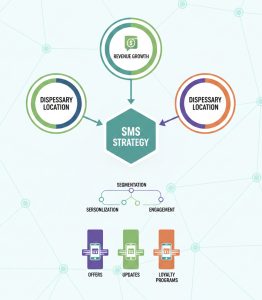
A Smarter Strategy for Dispensary Mass Texting
High-performing dispensary mass texting programs follow a simple rule: message only when there is clear value.
This usually means:
- Anchoring messages to real events or benefits
- Using mass texts to reinforce value already earned
- Avoiding constant discount-driven messaging
The goal is to stay present without becoming noise.
How Often Should Dispensaries Send Mass Texts?
There is no universal number, but effective programs tend to follow consistent ranges.
A practical baseline for most dispensaries is:
- 2 to 3 value-driven mass texts per week
- 1 true time-sensitive message when warranted
- Service or transactional messages tied to purchases
Frequency should increase only when engagement remains strong and opt-outs stay low.
Why Frequency Matters More Than Creativity
Carriers evaluate sender behavior over time.
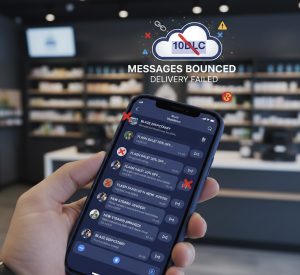
Excessive volume, even with compliant language, can still trigger filtering or throttling.
Consistent pacing and predictable timing help maintain sender trust and inbox placement.
Compliance Fundamentals for Dispensary Mass Texting
Mass texting does not remove compliance obligations. It increases scrutiny.
Dispensaries must ensure:
- Clear, documented opt-in consent
- Easy opt-out instructions in every message
- Age-gated access to promotional content
- Messaging aligned with registered use cases
Ignoring these fundamentals can result in blocked messages or long-term deliverability damage.
SMS vs MMS in Mass Texting
Some platforms default to MMS for mass texting to avoid early filtering.
This approach often:
- Increases cost
- Adds little customer value
- Makes messages feel more promotional
A smarter approach uses SMS by default and reserves MMS only when it improves clarity or deliverability.
Monitoring Performance After Sending
Mass texting should never be “send and forget.”
Dispensaries should monitor:
- Delivery and failure rates
- Carrier-level performance
- Opt-out trends
- Customer replies and engagement
These signals help refine timing, frequency, and message structure over time.
Final Takeaway
Dispensary mass texting works when it is treated as a communication channel, not a megaphone.
Clear strategy, controlled frequency, and strong compliance protect deliverability and keep customers engaged.
When mass texting reinforces real value, it becomes one of the most reliable tools in a dispensary’s communication stack.