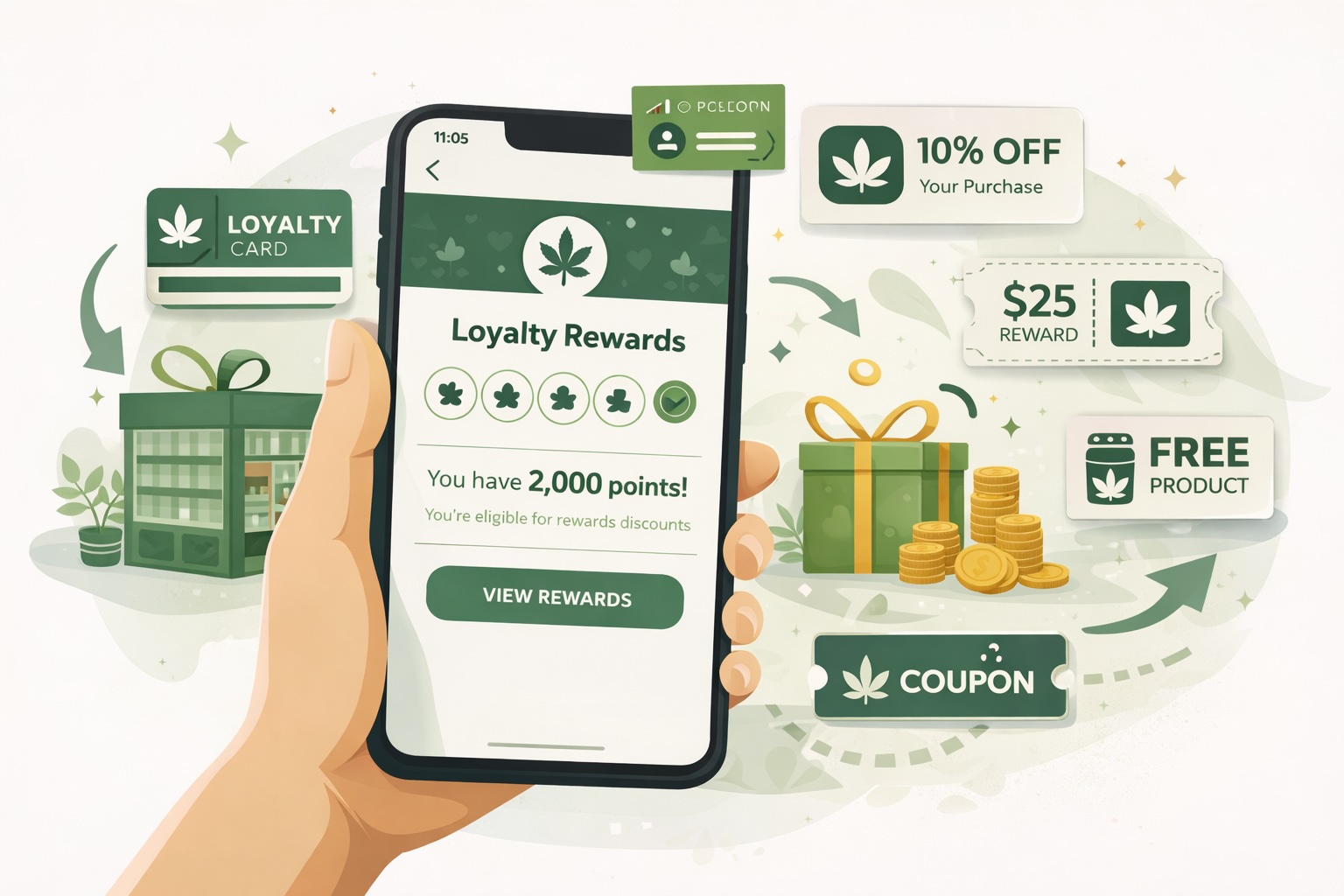
Dispensary loyalty programs are now a baseline expectation in cannabis retail. Points, rewards, and member pricing are widely adopted, yet many operators struggle to quantify whether loyalty efforts actually increase retention.
The limiting factor is rarely the loyalty structure itself. The real determinant of loyalty ROI is how effectively the program communicates with customers. In most dispensaries, SMS is the primary channel that connects loyalty systems to real customer behavior.
This article explains how dispensary SMS functions as retention infrastructure, how it impacts loyalty ROI, and what operators must consider to maintain compliance and deliverability.
Why Loyalty ROI Depends on Communication
Loyalty programs only work when customers are aware of their rewards and motivated to return. If customers forget they have points, offers, or available rewards, loyalty value decays quickly.
Email, in app messaging, and printed receipts are commonly used for loyalty communication, but none consistently reach customers in real time. Dispensary SMS delivers loyalty information directly to the device customers check most frequently.
From an ROI perspective, SMS reduces the gap between earning a reward and acting on it.
How Dispensary SMS Drives Retention
Retention increases when customers receive timely, relevant reminders tied to their loyalty status. SMS supports this by enabling immediate, short form communication that aligns with customer behavior.
Common retention driven SMS use cases include reward availability notifications, points balance updates, expiring reward reminders, and visit based follow ups.
These messages reinforce the value of returning without requiring customers to actively check an app or portal.
Measuring Loyalty ROI with SMS
Dispensary loyalty ROI is best measured through repeat visit frequency, time between visits, and customer lifetime value. SMS impacts each of these metrics by reducing friction and increasing awareness.
When loyalty messages are delivered reliably, dispensaries typically see shorter return cycles and higher visit consistency among opted in customers compared to non messaged segments.
SMS also enables controlled testing of loyalty messaging cadence, allowing operators to optimize retention without over messaging.
Compliance and Opt In Considerations
Loyalty related SMS messages are still subject to cannabis SMS compliance rules. Customers must explicitly opt in to receive text messages, and loyalty participation does not automatically grant SMS consent.
Clear disclosure, documented opt in, and functional opt out handling are required to maintain compliance and avoid carrier enforcement.
Failure to manage opt in correctly can negatively impact deliverability and undermine loyalty ROI.
Carrier Filtering and Message Deliverability
Carrier filtering plays a direct role in whether loyalty messages reach customers. High frequency, repetitive content, or unclear sender identification can trigger filtering even when messages are compliant.
Effective dispensary SMS loyalty programs balance message frequency, personalize content, and maintain consistent sending patterns to protect deliverability.
Deliverability issues directly reduce loyalty ROI by suppressing message reach without obvious failure indicators.
Operational Best Practices for Loyalty SMS
To maximize ROI, dispensaries should treat SMS as part of their loyalty infrastructure rather than an add on. This includes integrating loyalty data with messaging workflows and maintaining clean opt in records.
Operational discipline around message timing, segmentation, and performance review helps ensure loyalty messages remain effective and compliant.
Over time, this approach creates predictable retention lift rather than short term engagement spikes.
Final Takeaway
The ROI of dispensary loyalty is not determined by points or rewards alone. It is driven by how effectively those rewards are communicated and acted upon.
Dispensary SMS provides the most direct and operationally reliable channel for loyalty communication, making it a core component of retention strategy rather than a marketing add on.