- The Core Components of a Dispensary Technology Stack
- Point of Sale as the System of Record
- Ecommerce and Online Ordering
- Inventory and Data Synchronization
- The Challenge of System Coordination
- Why SMS Sits at the Center
- SMS as a Notification Layer, Not a System of Record
- Operational Benefits of a Central Communication Layer
- Final Takeaway
The Modern Dispensary Technology Stack (and Why SMS Sits at the Center)
Dispensaries today operate on a collection of specialized software systems rather than a single all-in-one platform.
Each system solves a specific problem, but the challenge lies in keeping them coordinated so staff and customers stay aligned.
This article outlines the core components of the modern dispensary technology stack and explains why SMS often functions as the connective layer between systems.
The Core Components of a Dispensary Technology Stack
While configurations vary by operator, most dispensary stacks include the same foundational tools.
- Point of Sale (POS)
- Ecommerce and online ordering
- Inventory management
- Customer data and CRM
- Loyalty and rewards systems
Each system serves a critical function, but they often operate independently.
Point of Sale as the System of Record
The POS system typically acts as the system of record for transactions, inventory movement, and compliance reporting.
However, POS systems are not designed to handle real-time customer communication.
Ecommerce and Online Ordering
Ecommerce platforms allow customers to browse and place orders before arriving at the store.
Without clear communication, online orders can create confusion around pickup timing and order status.
Inventory and Data Synchronization
Inventory systems must stay synchronized across POS, ecommerce, and fulfillment workflows.
Even small delays or mismatches can lead to customer frustration and operational inefficiency.
The Challenge of System Coordination
The biggest challenge in a multi-system environment is coordination.
- Staff need timely operational information
- Customers need clear expectations
- Systems need a shared communication layer
Without a unifying channel, information remains siloed.
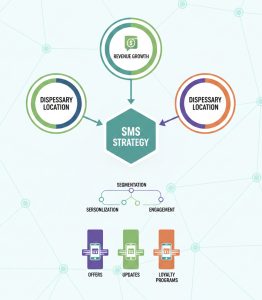
Why SMS Sits at the Center
SMS often becomes the central communication layer because it is simple, direct, and immediate.
Unlike email or in-app notifications, SMS does not require customers to install software or actively check another platform.
- Order confirmations
- Status updates
- Pickup notifications
- Operational alerts
SMS delivers information at the moment it is needed.
SMS as a Notification Layer, Not a System of Record
It is important to distinguish between systems of record and systems of communication.
SMS does not replace POS, inventory, or ecommerce systems. Instead, it connects them by notifying users when events occur.
Operational Benefits of a Central Communication Layer
When communication is centralized, operations become more predictable.
- Reduced customer inquiries
- Fewer missed or delayed pickups
- Improved staff efficiency
- Better customer experience
These benefits compound as volume increases.
Final Takeaway
The modern dispensary technology stack relies on multiple specialized systems working together.
SMS often sits at the center because it connects systems to people, ensuring that information flows clearly and efficiently throughout the operation.