Introduction
Running SMS for one dispensary is operational. Running SMS for five, ten, or fifty locations is architectural.
Most multi-location operators start with a single shared list, a single sending number, and a single content calendar. That works at two stores. It breaks at scale. You start seeing cross-location confusion, opt outs triggered by irrelevant messages, uneven delivery performance, and internal chaos about who controls what.
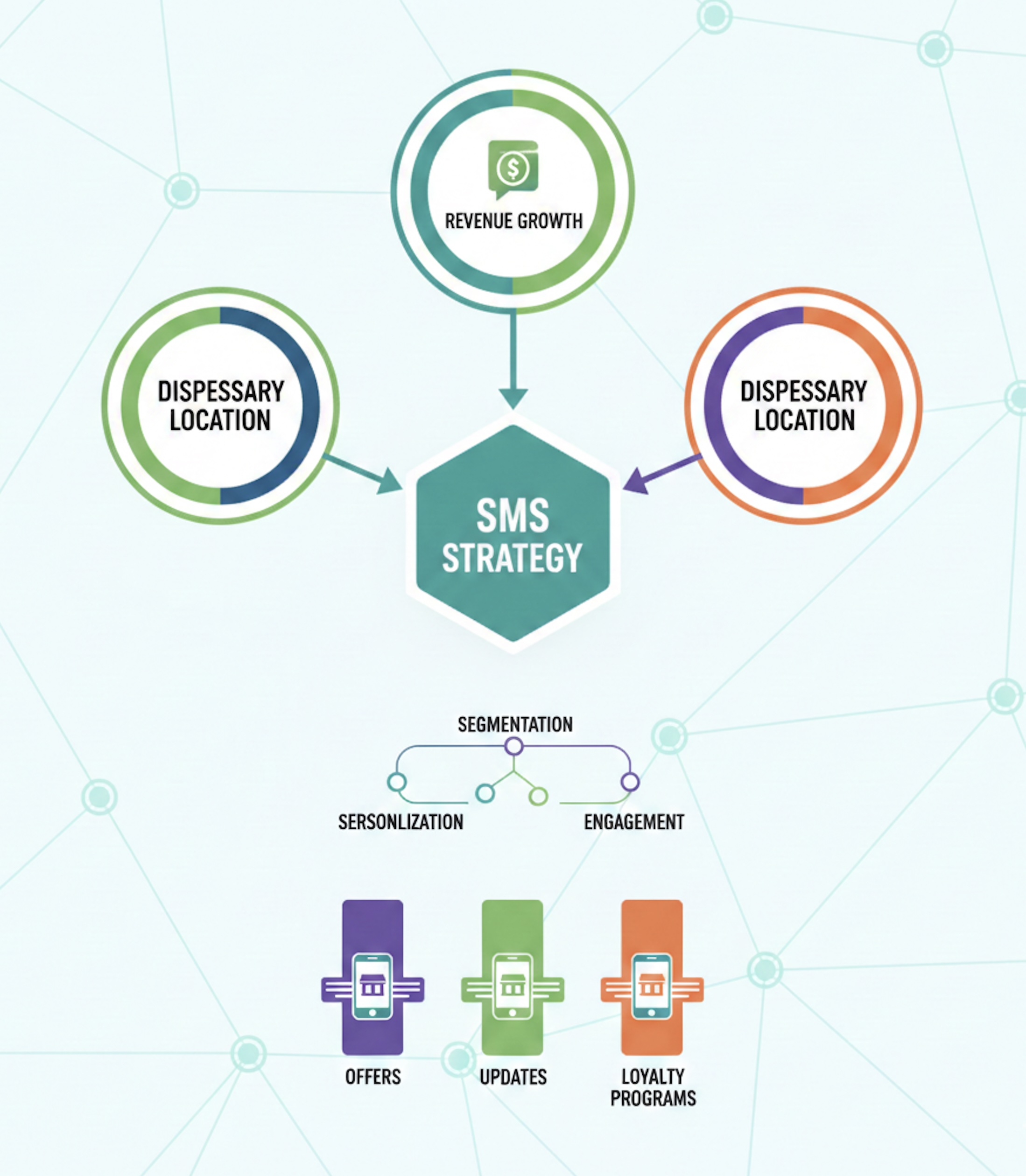
This article outlines how multi-location dispensaries should structure their SMS strategy for compliance, deliverability, and repeat revenue.
What’s Really Happening
As you scale locations, three pressure points emerge:
Relevance fragmentation. A customer near Location A does not care about Location C’s menu update.
Throughput constraints. Shared 10DLC campaigns can hit rate limits when multiple stores blast at once.
Operational misalignment. Corporate wants brand consistency. Store managers want local control.
Without segmentation by location and disciplined routing, volume spikes increase carrier scrutiny and filtering risk. If you are already seeing uneven delivery, review your routing logic under smart routing.
Why It Matters for Dispensaries
Multi-location operators have more upside and more risk.
You can centralize strategy while localizing content.
You can test promotions across markets and compare performance.
You can accidentally burn your entire list with one poorly targeted blast.
SMS is not just marketing. It is operational infrastructure. Order updates, pickup notifications, and service alerts must be location-specific to maintain trust and reduce complaints. For broader marketing context, see dispensary text marketing.
Recommended Structure for Multi-Location SMS
1. Segment by Primary Store Affinity
Every subscriber should be tagged with a “primary location” based on first purchase, most frequent visits, or explicit selection during opt in.
Implementation: Capture store preference at signup or infer from POS data.
Result: Location-specific campaigns instead of chain-wide blasts.
2. Separate Operational and Promotional Traffic
Operational messages such as order alerts should not compete with high-volume promotional sends.
Use distinct logic flows in automations so transactional traffic remains stable even during large campaigns.
3. Control Central Strategy, Enable Local Execution
Corporate should define:
Compliance language
Approved content themes
Frequency guardrails
Store managers can localize:
Menu highlights
Event reminders
Inventory updates
Replies should route into a monitored inbox workflow to prevent location-level response gaps.
4. Use Location-Specific Sending Numbers When Needed
In some cases, assigning dedicated numbers per store improves trust and routing stability. This reduces cross-location confusion and allows throughput scaling as your footprint grows.
5. Register 10DLC Campaigns Properly for Multi-Location Brands
Your 10DLC registration should clearly describe whether messaging is location-specific or brand-wide. Misalignment between declared use case and actual traffic patterns can create rejections.
Review 10DLC for dispensaries to ensure your registration reflects how you actually send.
Example Multi-Location Campaign Structure
| Segment | Message Type | Example (Compliant) |
|---|---|---|
| Location A – Frequent Buyers | Menu Update | “Location A menu updated today. Check availability before visiting. Reply STOP to opt out.” |
| Location B – Lapsed | Re-engagement | “It’s been a while since your last visit to Location B. See what’s new this week. Reply STOP to opt out.” |
| All Locations – Operational | Holiday Hours | “Holiday hours updated for your selected location. View details before your visit. Reply STOP to opt out.” |
Notice that none of these rely on aggressive promotional language. Relevance does more work than hype.
Common Mistakes or Misconceptions
One master list for all stores. This creates irrelevant messaging and higher opt out rates.
Uncoordinated blasts. Multiple stores sending at the same time can overwhelm throughput limits.
No location tag on subscribers. Without tagging, segmentation becomes guesswork.
Ignoring compliance consistency. Each location must follow the same consent and disclaimer standards. Review cannabis SMS compliance for baseline expectations.
Letting managers freestyle content. In regulated industries, consistency protects the brand.
FAQ
Question: Should each location have its own SMS list?
Answer: Subscribers should be segmented by location affinity. Whether you maintain separate lists or a unified but segmented database depends on your platform, but targeting must be location-aware.
Question: Can we send chain-wide promotions?
Answer: Yes, but only when the message is universally relevant. Overuse of brand-wide blasts reduces engagement.
Question: How do we manage replies across multiple stores?
Answer: Route replies into a centralized system with store-level assignment logic so no inquiry goes unanswered.
Question: Will multi-location traffic hurt deliverability?
Answer: It can if volume spikes and complaint rates increase. Proper routing and segmentation reduce that risk.
Question: Do we need separate 10DLC registrations per location?
Answer: That depends on your sending architecture and how your brand is structured. The key is that registration accurately reflects traffic behavior.
Question: How often should each location send?
Answer: Frequency should be based on engagement and purchase cycles for that specific store, not a uniform corporate calendar.
Metrics or Signals to Watch
| Metric | What to Monitor | Healthy Direction |
|---|---|---|
| Opt out rate by location | Relevance and frequency fit | Stable or declining |
| Delivery rate by carrier | Filtering patterns | Consistent across stores |
| Revenue per subscriber | Local campaign effectiveness | Improving with segmentation |
| Reply response time | Operational readiness | Fast and consistent |
If metrics diverge significantly by location, your strategy is not truly localized.
Sources and Further Reading
-
The Campaign Registry explains brand and campaign registration expectations under A2P 10DLC.
-
CTIA Messaging Principles and Best Practices outlines consent and program transparency standards.
-
FCC telemarketing guidance summarizes consumer protection expectations around automated messaging.
This article provides operational guidance and does not constitute legal advice.