- Why Text Messaging Is Different in the Gun Industry
- Common Firearms Text Messaging Use Cases
- Why SMS Works for Firearms Businesses
- Consent Requirements for Firearms Text Messaging
- Age Awareness and Eligibility Considerations
- Transactional vs Promotional Messaging in the Firearms Industry
- Carrier Scrutiny of Firearms Text Messaging
- Why Generic SMS Platforms Often Fail Firearms Businesses
- Infrastructure Built for Regulated Messaging
- How SMS Supports Trust in the Gun Industry
- Final Takeaway
Text messaging is a powerful communication tool, but firearms businesses operate under stricter rules than most industries.
Gun retailers, shooting ranges, manufacturers, and firearms service providers face platform restrictions, carrier scrutiny, and heightened compliance expectations when communicating with customers.
This article explains how the gun industry uses text messaging responsibly, what makes firearms SMS different, and why regulated messaging infrastructure matters.
Why Text Messaging Is Different in the Gun Industry
The firearms industry is classified as a regulated category by many platforms and service providers.
This classification affects how messages are reviewed, delivered, and monitored.
- Advertising and promotional restrictions
- Heightened content review
- Stricter consent expectations
As a result, firearms businesses must be more deliberate about how SMS is used.
Common Firearms Text Messaging Use Cases
Most firearms SMS programs focus on operational and informational communication rather than marketing.
- Order status notifications
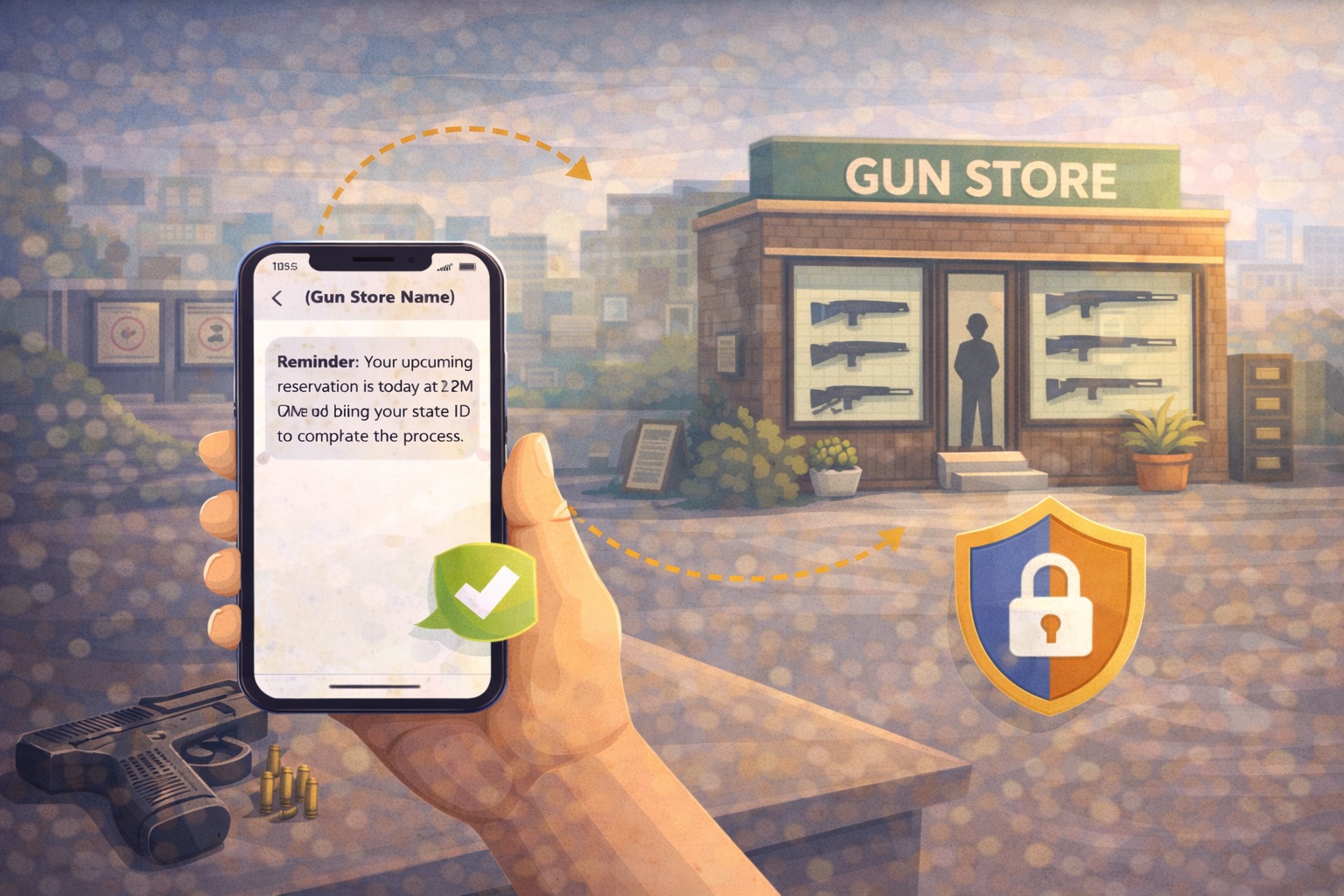
- Appointment or reservation reminders
- Service and repair updates
- Customer service follow-ups
These messages are directly tied to customer actions and expectations.
Why SMS Works for Firearms Businesses
SMS allows firearms businesses to communicate without relying on social media platforms or algorithms.
Messages are delivered directly to a customer’s phone, providing consistent visibility.
- No app installation required
- Broad device compatibility
- Immediate message visibility
This makes SMS especially useful for time-sensitive communication.
Consent Requirements for Firearms Text Messaging
Clear and explicit consent is the foundation of compliant firearms SMS.
Customers must knowingly opt in to receive text messages from a specific firearms business.
- Clear identification of the sending business
- Explanation of message purpose
- Simple opt-out instructions
Consent should never be assumed or reused across unrelated entities.
Age Awareness and Eligibility Considerations
Firearms businesses must consider age and eligibility requirements when collecting SMS consent.
Age-aware consent flows help ensure that messages are only sent to appropriate recipients.
This supports both regulatory expectations and carrier trust.
Transactional vs Promotional Messaging in the Firearms Industry
Transactional messages are the most reliable form of firearms SMS.
- Order confirmations
- Status updates
- Operational notifications
Promotional messaging, when used, must be limited, clearly disclosed, and compliant with platform and carrier rules.
Carrier Scrutiny of Firearms Text Messaging
Mobile carriers closely monitor messaging traffic from regulated industries.
They evaluate sender reputation using signals such as opt-out rates, complaint activity, and consistency.
Predictable, restrained messaging helps maintain long-term deliverability.
Why Generic SMS Platforms Often Fail Firearms Businesses
Many messaging platforms are designed for unrestricted retail or ecommerce use cases.
These platforms often lack the consent handling, documentation, and carrier alignment required for firearms SMS.
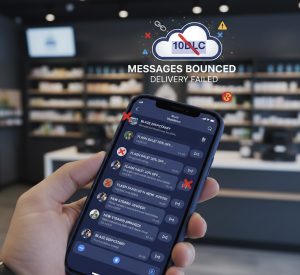
This mismatch frequently leads to filtering, throttling, or sudden service disruptions.
Infrastructure Built for Regulated Messaging
Firearms text messaging works best when supported by infrastructure designed for regulated industries.
This includes systems that prioritize consent records, predictable sending behavior, and compliance-first workflows.
How SMS Supports Trust in the Gun Industry
When customers recognize the sender and expect the message, trust increases.
Clear communication reduces confusion, missed appointments, and unnecessary inbound calls.
Final Takeaway
Gun industry text messaging requires a different approach than traditional marketing SMS.
Firearms businesses that focus on consent, clarity, and regulated messaging infrastructure can use SMS safely and reliably as a customer communication channel.