- What Is Dispensary Software?
- The Modern Dispensary Software Stack
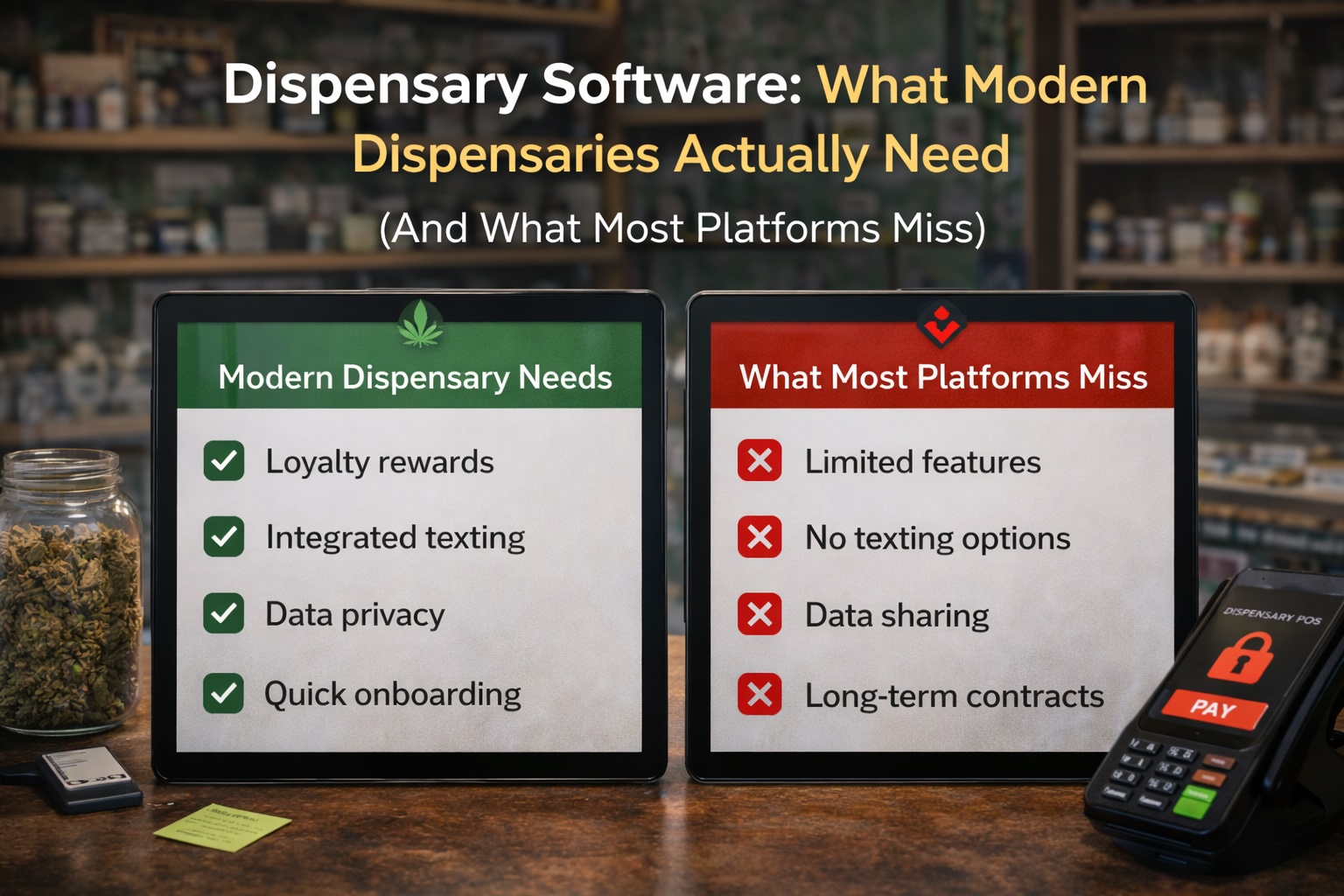
- What Most Dispensary Software Gets Wrong
- Why Communication Software Is Now Central to Dispensary Operations
- How Dispensaries Should Evaluate Software in 2026
- Why Many Dispensaries Keep Their POS but Change Everything Else
- Final Takeaway: Dispensary Software Is a System, Not a Tool
Search for dispensary software and you’ll find a familiar list: POS systems, inventory tools, menu management platforms, and “all-in-one” solutions promising to do everything. But most dispensary operators know the truth already: software doesn’t fail because it lacks features. It fails because it doesn’t reflect how dispensaries actually operate.
This article breaks down what dispensary software really means in 2026, how modern dispensaries evaluate their technology stack, and what most platforms still get wrong.
What Is Dispensary Software?
Dispensary software refers to the systems that power cannabis retail operations on a daily basis. That includes far more than point-of-sale. In practice, dispensary software is a collection of connected tools that handle compliance, inventory, communication, customer experience, and operational visibility.
The most successful dispensaries don’t rely on a single platform to do everything. They build a software stack where each system plays a specific role without slowing down staff or increasing compliance risk.
The Modern Dispensary Software Stack
To understand dispensary software correctly, it helps to break it into functional layers. Most dispensaries operate with some version of the following stack:
- POS software: Handles transactions, inventory counts, taxes, and state reporting.
- Inventory and menu management: Keeps in-store and online menus accurate and compliant.
- Ecommerce and online ordering: Supports pickup, pre-orders, and browsing.
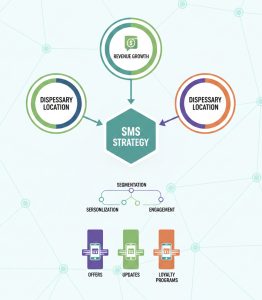
- Customer communication: SMS, notifications, order updates, and service messages.
- Compliance and consent systems: Manages opt-in, age gates, and messaging rules.
- Reporting and visibility: Shows what actually happened across channels.
Most dispensary software problems happen when one of these layers is treated as an afterthought, especially communication and compliance.
What Most Dispensary Software Gets Wrong
Many platforms position themselves as “all-in-one” dispensary software, yet struggle in real-world operations. The issues are rarely technical. They are structural.
- Communication is treated as marketing: Texting is bolted on instead of built as operational infrastructure.
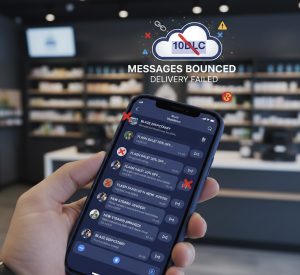
- No carrier-level visibility: Dispensaries can’t see delivery issues, filtering, or failures.
- Weak consent modeling: Opt-in is collected once and forgotten, creating long-term risk.
- MMS overuse: Platforms default to images to “improve deliverability,” increasing costs without value.
- Disconnected systems: POS, messaging, ecommerce, and loyalty don’t talk to each other.
When these gaps exist, dispensaries end up spending more time managing software than running their business.
Why Communication Software Is Now Central to Dispensary Operations
Modern dispensary software is no longer defined by what happens at the register. It’s defined by what happens before and after the sale. Communication is the connective tissue between systems.
Text messaging has become the most reliable direct channel for dispensaries because it supports:
- Order confirmations and pickup notifications
- Service updates and issue resolution
- Rewards and account notifications
- Time-sensitive operational messaging
When communication is designed as part of the dispensary software stack, it reduces staff workload, improves customer experience, and strengthens compliance.
For a deeper look at how messaging fits into cannabis retail, see our dispensary text marketing guide and our breakdown of age-gated, logically related consent flows.
How Dispensaries Should Evaluate Software in 2026
Instead of asking “what features does this software have?”, modern dispensaries ask better questions:
- Does this reduce friction for staff at checkout?
- Does it improve compliance rather than create new risk?
- Can customers recognize and trust our communication?
- Does it scale across locations and volumes?
- Can we see what actually happened after messages were sent?
Dispensary software should quietly support operations, not demand constant attention.
Why Many Dispensaries Keep Their POS but Change Everything Else
POS replacement is disruptive, expensive, and risky. That’s why many dispensaries keep their POS and instead modernize the layers around it. Communication, consent, and customer experience are often the fastest areas to improve ROI without operational disruption.
This is where platforms focused on regulated messaging infrastructure can integrate alongside existing systems rather than compete with them.
Final Takeaway: Dispensary Software Is a System, Not a Tool
The best dispensary software stacks don’t try to do everything. They focus on doing the right things well. POS handles transactions. Inventory handles compliance. Communication connects the customer to the operation.
Dispensaries that treat software as infrastructure instead of features are better positioned to scale, stay compliant, and operate efficiently as regulations and carrier rules continue to evolve.
If you’re evaluating how messaging and communication fit into your dispensary software stack, Blackleaf was built specifically for that role.