- What Is a Dispensary POS?
- What a Dispensary POS Does Well
- What a Dispensary POS Is Not Designed to Do
- The Gap Between POS and Daily Operations
- How Modern Dispensaries Extend Their POS
- Why POS Data Alone Is Not Enough
- How to Evaluate a Dispensary POS in 2026
- Dispensary POS vs. Dispensary Software
- Final Takeaway: POS Is the Foundation, Not the System
A dispensary POS, or dispensary point of sale system, is one of the most critical pieces of technology in cannabis retail. It processes transactions, tracks inventory, and reports data to state regulators. But many dispensaries expect their POS to do far more than it was designed to handle.
Understanding what a dispensary POS does well, and where its limitations are, is key to building a reliable and scalable operation.
What Is a Dispensary POS?
A dispensary POS (point of sale) system is the software used at the register to complete cannabis sales. It records transactions, applies taxes, updates inventory counts, and generates compliance reports required by state regulators.
In simple terms, the POS is the system of record for sales and inventory movement.
What a Dispensary POS Does Well
Modern dispensary POS systems are highly specialized for regulated retail. They are designed to handle complex requirements that standard retail systems cannot.
- Processing in-store transactions
- Tracking inventory quantities and adjustments
- Applying cannabis-specific tax rules
- Generating compliance and regulatory reports
- Supporting audits and inspections
For these core functions, the POS is indispensable. No dispensary can operate without a compliant point of sale system.
What a Dispensary POS Is Not Designed to Do
While the POS is critical, it is not designed to run every aspect of dispensary operations. Problems arise when dispensaries expect their POS to act as a full operational platform.
Most dispensary POS systems are not built to handle:
- Customer communication and messaging
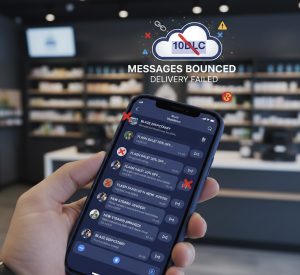
- SMS deliverability and carrier compliance
- Consent and opt-in management for texting
- Campaign performance visibility
- Age-gated promotional content
These gaps are not flaws. They reflect the original purpose of POS software: transactions and compliance.
The Gap Between POS and Daily Operations
As dispensaries scale, the gap between what the POS handles and what operations require becomes more visible.
Operational needs like order readiness notifications, service updates, rewards communication, and customer follow-ups typically fall outside the scope of the POS.
When these functions are forced into the POS or handled manually by staff, inefficiencies and compliance risks increase.
How Modern Dispensaries Extend Their POS
Rather than replacing their POS, most successful dispensaries layer additional systems around it. This allows each platform to focus on what it does best.
- POS for transactions and inventory control
- Ecommerce for browsing and ordering
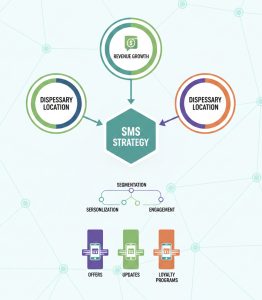
- Communication systems for SMS and notifications
- Consent and age-gated messaging workflows
This approach reduces staff workload and creates a clearer separation of responsibilities across systems.
For a deeper look at how communication fits into dispensary operations, see our Dispensary Text Marketing Guide and Age-Gated, Logically Related Consent Forms.
Why POS Data Alone Is Not Enough
POS data shows what was sold. It does not explain why customers return, disengage, or miss opportunities.
Modern dispensaries rely on communication systems to turn POS data into action:
- Order and pickup notifications
- Rewards and account updates
- Service-related messaging
- Time-sensitive operational alerts
Without these layers, the POS remains isolated from the customer experience.
How to Evaluate a Dispensary POS in 2026
When evaluating a dispensary point of sale system, the most important question is not feature count. It is how well the POS integrates into a broader operational stack.
Key evaluation criteria include:
- Stability and uptime
- Compliance reliability
- Inventory accuracy
- Integration with external systems
- Ability to support multi-location operations
A strong POS should act as a foundation, not a bottleneck.
Dispensary POS vs. Dispensary Software
A dispensary POS is a critical component of dispensary software, but it is not the entire system.
Dispensary software includes all the tools required to operate the business day to day, while the POS focuses on transactions and compliance.
Understanding this distinction helps operators build more resilient and flexible operations.
Final Takeaway: POS Is the Foundation, Not the System
A dispensary point of sale system is essential, but it cannot run a modern dispensary on its own. High-performing operators treat the POS as a foundation and layer additional systems for communication, compliance, and customer experience.
When the POS is supported by the right infrastructure, dispensary operations become easier to manage, easier to scale, and more resilient to regulatory and market changes.