- What Is Cannabis SMS Messaging?
- What Are Push Notifications?
- Reach: SMS vs Push Notifications
- Engagement and Visibility
- Sales Impact and Conversion Behavior
- Compliance and Deliverability Considerations
- Cost and Scalability
- Which Channel Drives More Sales?
- Using SMS and Push Notifications Together
- Final Takeaway
Dispensaries have more communication tools than ever, but two channels dominate most customer outreach strategies: SMS text messaging and push notifications.
Both can be effective, but they behave very differently when it comes to reach, engagement, and sales impact.
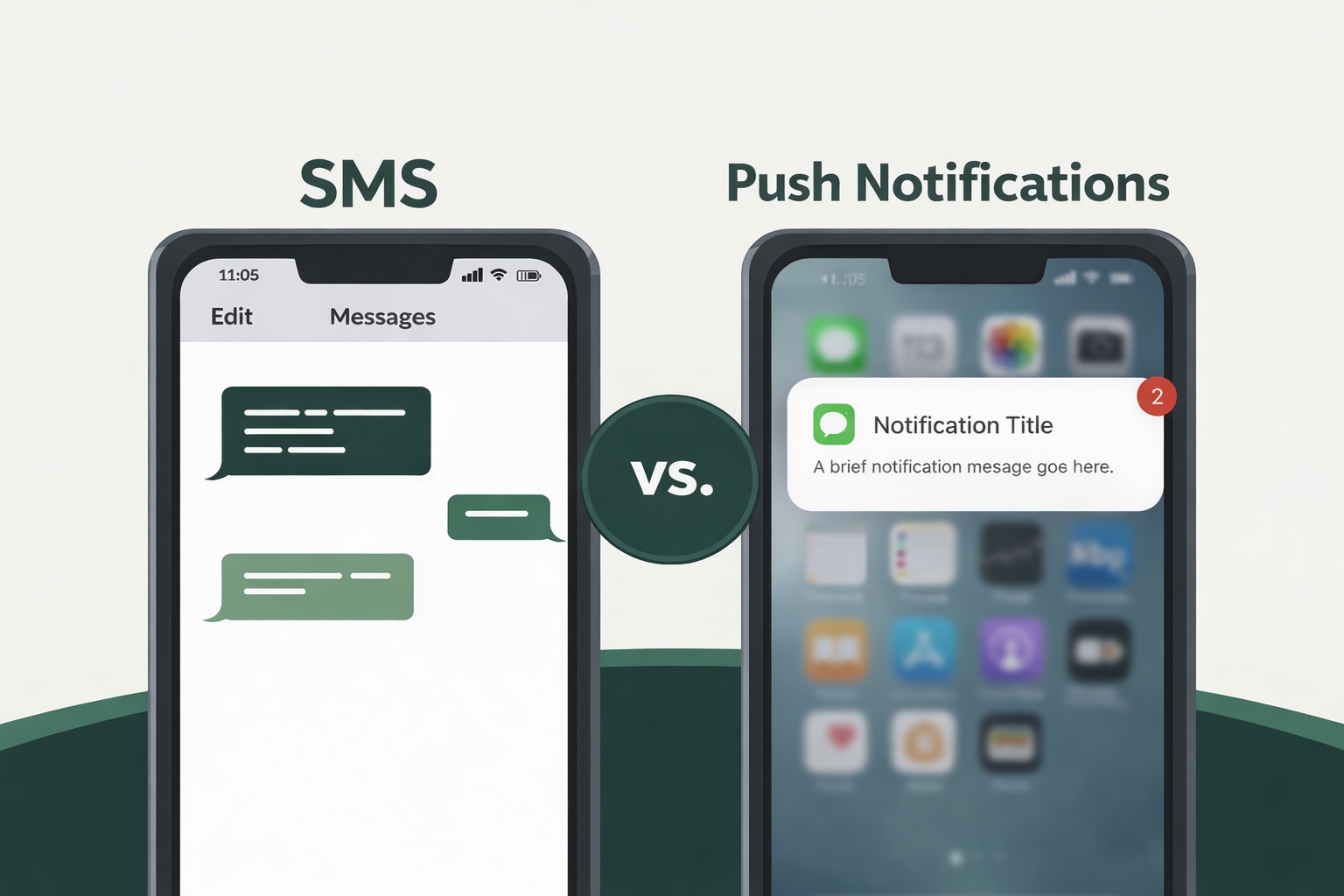
This article compares cannabis SMS and push notifications, explains how each channel performs, and outlines when one is more effective than the other for dispensaries.
What Is Cannabis SMS Messaging?
SMS messaging allows dispensaries to send text messages directly to a customer’s mobile phone number.
SMS does not require an app and works on virtually every mobile device.
- Order confirmations and pickup alerts
- Promotional messages
- Operational notifications
Because SMS reaches customers where they already communicate, it offers broad reach.
What Are Push Notifications?
Push notifications are messages sent through a mobile app installed on a customer’s device.
To receive push notifications, customers must download the dispensary’s app and allow notifications.
- App-based promotions
- Feature announcements
- Engagement reminders
Push notifications offer richer visuals but rely on app adoption.
Reach: SMS vs Push Notifications
Reach is one of the largest differences between SMS and push notifications.
- SMS reaches any customer with a phone number
- Push notifications only reach app users
- SMS opt-in rates are typically higher than app installs
For most dispensaries, SMS reaches a significantly larger audience.
Engagement and Visibility
SMS messages are typically seen shortly after delivery.
Push notifications compete with other app alerts and can be disabled easily by users.
- SMS messages appear in the main inbox
- Push notifications depend on device settings
- Disabled push notifications eliminate reach entirely
This difference impacts consistency of engagement.
Sales Impact and Conversion Behavior
Both channels can drive sales, but in different ways.
- SMS performs well for time-sensitive actions
- Push notifications support ongoing app engagement
- SMS conversions often occur quickly after delivery
SMS tends to be more effective for immediate sales, while push notifications support long-term engagement.
Compliance and Deliverability Considerations
Cannabis SMS is subject to carrier compliance rules, including opt-in and content requirements.
Push notifications are governed by app store policies and device-level controls.
- SMS requires documented consent
- Push notifications rely on app permissions
- Both channels require responsible messaging
Each channel has different compliance risks.
Cost and Scalability
SMS and push notifications have different cost structures.
- SMS incurs per-message costs
- Push notifications have lower marginal costs
- SMS infrastructure costs scale with volume
Dispensaries often balance reach and cost when choosing a primary channel.
Which Channel Drives More Sales?
For most dispensaries, SMS drives more immediate sales due to higher reach and visibility.
Push notifications perform best when paired with a strong app adoption strategy.
Using SMS and Push Notifications Together
Many dispensaries use both channels as part of a layered communication strategy.
- SMS for critical and time-sensitive messages
- Push notifications for app engagement
- Clear separation of message intent
Using each channel for its strengths reduces fatigue and improves performance.
Final Takeaway
SMS and push notifications serve different roles in dispensary communication.
For driving immediate sales at scale, cannabis SMS typically outperforms push notifications. Push notifications remain valuable for customers who are already deeply engaged through a dispensary app.