- What First-Party Data Means for Dispensaries
- Why Cannabis Operators Lose Audience Ownership
- Why SMS Is a First-Party Data Engine
- The First-Party Data You Should Capture Through Dispensary SMS
- How to Build Your SMS Audience Without Damaging Compliance
- Deliverability and Carrier Filtering Considerations
- Using SMS Data to Improve Retention Over Time
- First-Party Audience Mistakes Dispensaries Should Avoid
- Final Takeaway
Dispensaries depend on customer relationships, but many do not actually own them. When acquisition happens through third-party platforms, marketplaces, or social channels, the dispensary may get a transaction but not a durable audience.
In cannabis retail, this problem is amplified by advertising restrictions, compliance constraints, and platform enforcement. Your reach can decline overnight due to policy changes, account limitations, or reduced organic visibility.
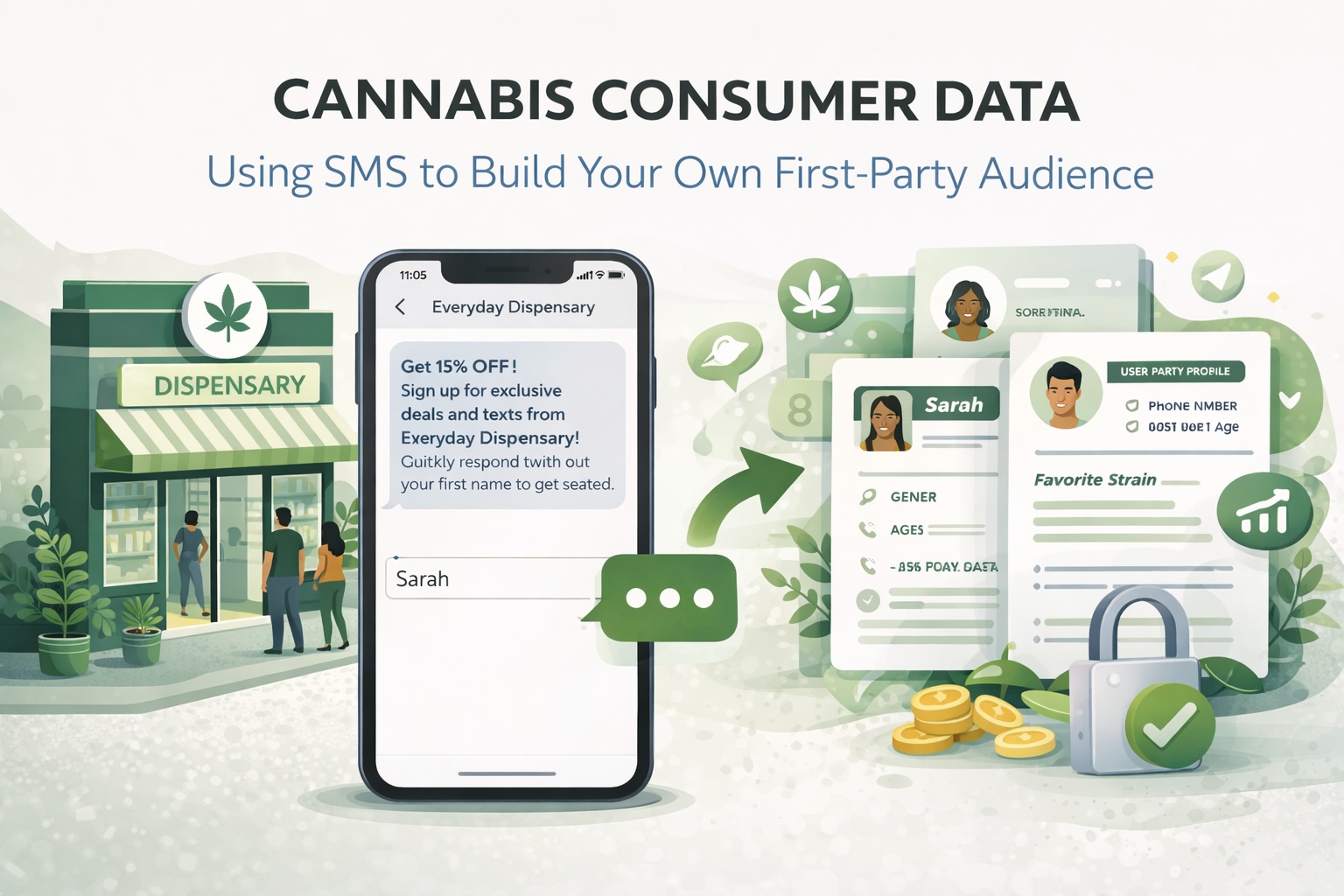
SMS is one of the most practical ways to build a first-party audience because it creates a permissioned, direct channel to customers that you can operate independently. This article explains what first-party cannabis consumer data is, how dispensary SMS supports it, and how to build it without damaging deliverability or compliance posture.
What First-Party Data Means for Dispensaries
First-party data is information you collect directly from customers through your own systems and with their consent. For dispensaries, this typically includes phone number, opt-in status, purchase behavior, visit history, and preferences captured through your website, in-store workflows, or loyalty program.
First-party data matters because it is durable. You can use it to communicate with customers without relying on external algorithms or paid advertising platforms that may restrict cannabis content.
The objective is not to collect more data. The objective is to collect the right data, with clear consent, and to use it in ways that maintain customer trust and carrier deliverability.
Why Cannabis Operators Lose Audience Ownership
Dispensaries often lose audience ownership in predictable ways:
- Third-party acquisition: customers purchase through marketplaces or delivery aggregators where the dispensary has limited direct access to the customer relationship.
- Social media dependence: audience reach depends on platforms that can restrict cannabis content or deprioritize posts.
- Inconsistent opt-in workflows: customers buy once but are never asked to opt in to a communication channel.
- Data fragmentation: customer data lives in disconnected tools, making it hard to build a unified audience.
When you do not own the channel, you do not control retention. This is why first-party audience building is an infrastructure decision, not a marketing trend.
Why SMS Is a First-Party Data Engine
SMS works as a first-party audience channel because it is permissioned, direct, and measurable. If a customer opts in to dispensary SMS, you have a durable relationship that is not dependent on a platform feed or ad account status.
From an operational standpoint, SMS also creates useful data automatically. Opt-in events, opt-outs, clicks, and response behavior can be captured and used to improve segmentation and reduce wasted messaging.
For dispensaries, SMS is often the highest leverage channel because it reaches customers without requiring app adoption and without relying on email inbox placement.
The First-Party Data You Should Capture Through Dispensary SMS
SMS should not be treated as a list of phone numbers. It should be treated as a structured dataset that supports retention and compliance.
At minimum, your dispensary SMS system should track:
- Phone number and normalized formatting for consistent sending.
- Opt-in status with timestamp and source of consent.
- Opt-out status with timestamp and keyword used.
- Message type eligibility such as marketing vs transactional permissions if your disclosures differentiate.
- Engagement signals such as clicks, replies, and delivery outcomes where available.
- Customer linkage to POS or ecommerce identifiers so messaging is tied to real behavior.
This data is what transforms SMS from broadcasting into a retention system.
How to Build Your SMS Audience Without Damaging Compliance
First-party audience building only works when the opt-in is valid and documented. Cannabis text messaging has additional scrutiny from carriers and vendors, so shortcuts usually reduce deliverability and increase risk.
Practical opt-in methods for dispensaries include:
- In-store opt-in at checkout with clear disclosure and affirmative consent.
- Website opt-in using age gate and consent-first forms.
- Loyalty enrollment that separately captures SMS consent rather than assuming it.
- Receipt and post-purchase prompts that direct customers to a consent flow.
Do not assume that loyalty enrollment equals SMS consent. Do not rely on implied permission. Consent must be clear, and opt-out must work reliably.
Deliverability and Carrier Filtering Considerations
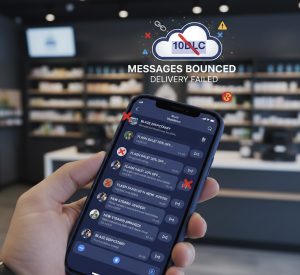
First-party audience value is only real if your messages reach customers. In cannabis, carrier filtering can suppress deliverability without obvious error signals. This is why audience building and message operations must be designed together.
To protect deliverability as your list grows:
- Start with predictable cadence and avoid sudden volume spikes.
- Use consistent sender identity and avoid rotating numbers unnecessarily.
- Avoid high-risk content patterns that commonly trigger filtering for regulated industries.
- Separate transactional and promotional messaging so customers understand why they are receiving a text.
- Monitor opt-out and complaint signals because these influence carrier trust.
Carrier filtering is often the hidden reason a dispensary believes SMS is underperforming. It is not always the offer. Sometimes the message is simply not reaching the phone.
Using SMS Data to Improve Retention Over Time
Once you have a consented SMS audience, the next step is turning that list into retention infrastructure. This requires controlled segmentation and operational discipline.
High-ROI segmentation approaches typically include:
- New customer onboarding that sets expectations and reduces one-time visits.
- Lapsed customer reactivation based on time since last purchase.
- High-frequency customer protection with fewer, more relevant messages to reduce fatigue and opt-outs.
- Category affinity when you have purchase data tied to the phone number.
Each segment should have a defined purpose, frequency, and success metric. If you cannot explain why a customer is receiving a message, you will eventually see opt-outs rise.
First-Party Audience Mistakes Dispensaries Should Avoid
Most first-party audience programs fail due to operational shortcuts:
- Collecting phone numbers without clear opt-in, which leads to complaints and filtering.
- Over-messaging, which increases opt-outs and reduces long-term list value.
- Ignoring consent source and timestamps, which weakens compliance posture.
- Using static, repetitive templates, which can increase carrier filtering risk.
- Failing to connect SMS to POS behavior, which prevents meaningful segmentation.
The goal is a durable audience, not the largest list. A smaller, high-consent, high-deliverability list often outperforms a larger list with weak opt-in quality.
Final Takeaway
Cannabis consumer data is only valuable when you own the relationship and can communicate reliably. Dispensary SMS is one of the most direct ways to build a first-party audience because it creates permissioned access to customers without dependence on external platforms.
Build your SMS audience with consent-first workflows, track opt-in and opt-out events as operational data, and treat carrier filtering and deliverability as part of your infrastructure. That is how dispensaries turn SMS into durable first-party audience ownership.